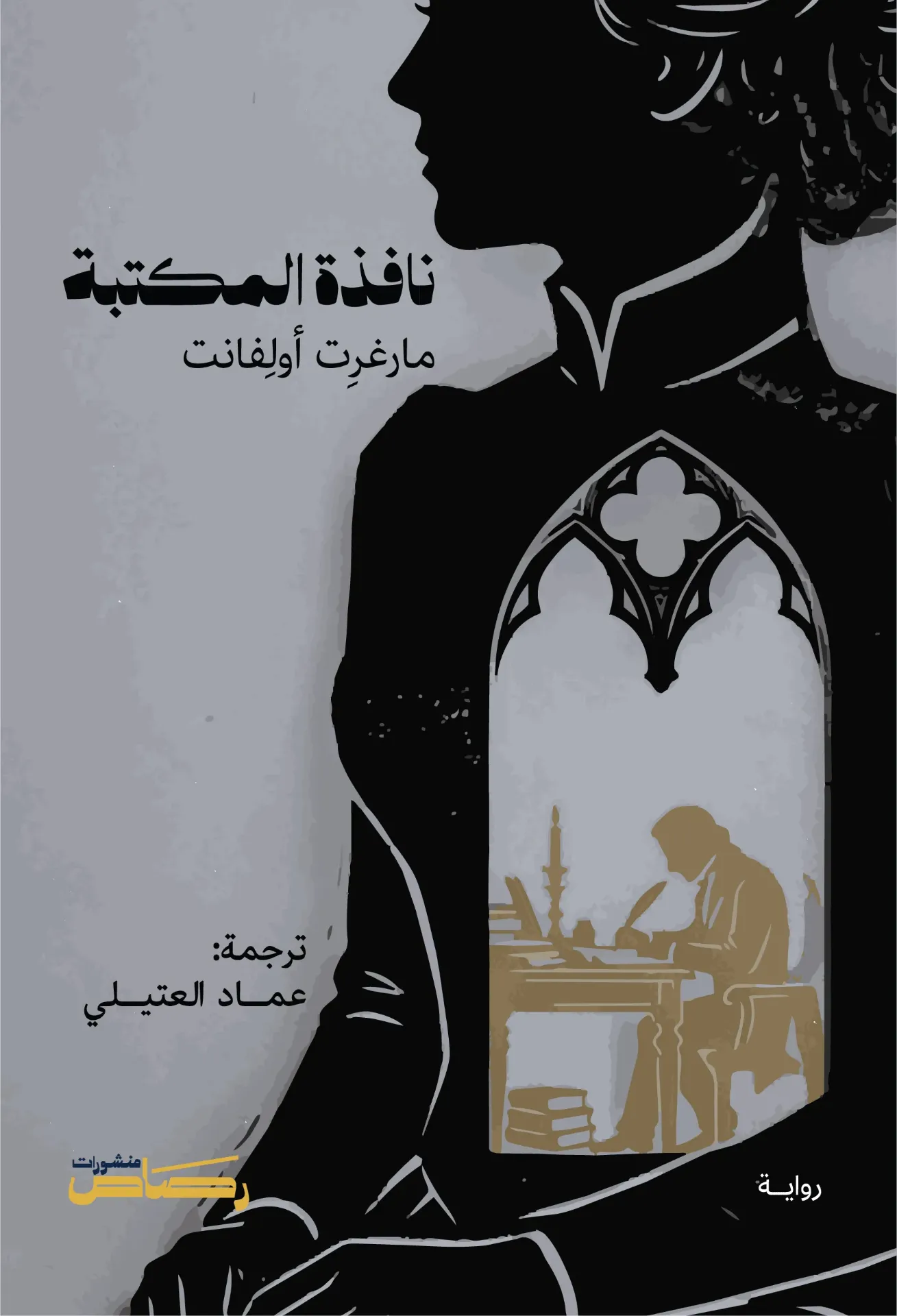
نافذة المكتبة
**Margaret Oliphant** was one of the most distinguished writers of the Victorian era, celebrated for her ability to capture the hidden tensions within ordinary life—where everything appears calm on the surface while desires, disappointments, and secrets quietly move beneath it. In **The Window of the Library**, she presents a brief yet intensely crafted work that blends psychological mystery with literary delicacy, proving that fear does not need noise or spectacle to become deeply unsettling.
The story follows a woman living in a house overlooking an old library, where she begins noticing a recurring scene behind one of the opposite windows: a man sitting alone, absorbed in writing. What initially appears to be a meaningless detail gradually transforms into a mystery that disturbs the mind and awakens curiosity, as observation begins to merge with illusion, and reality becomes entangled with the images created by an imagination left alone for too long.
At the heart of the work lies Oliphant’s greatest strength. She does not rely on dramatic events, but instead builds a growing atmosphere of uncertainty and unanswered questions. She makes the reader doubt what they see, then doubt the observer, and eventually doubt themselves. Through a single window, she reveals how obsession can construct an entire world, and how a mind searching desperately for meaning can transform a distant image into a complete reality.
After reading, one question will remain lingering in your thoughts: **How often do we believe we are observing the world, when in truth we are only watching our own reflection within it?**
You will leave the story more cautious about your own certainty and less willing to trust appearances. For some windows do not open outward—they open toward the hidden places within ourselves that we spend our lives trying to escape.
مارغريت أوليفانت