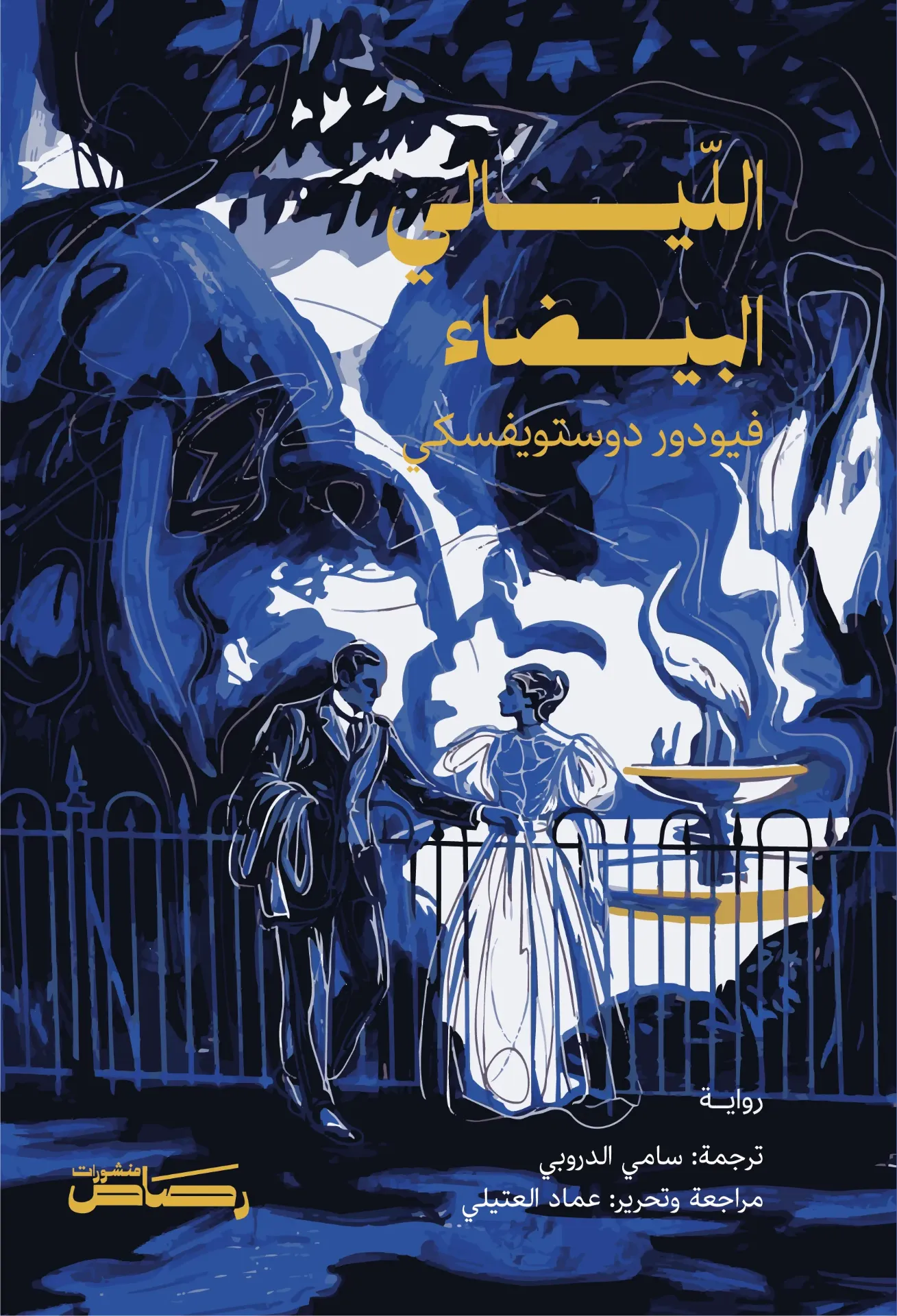
الليالي البيضاء
**Fyodor Dostoevsky** stands among the greatest writers ever to explore the human soul as it fractures beneath loneliness, longing, and guilt. More than a novelist, he was an excavator of the psyche, uncovering the truths people would rather leave buried. Having survived a death sentence, endured exile, poverty, and profound personal hardship, he transformed those experiences into literature that continues to haunt readers across generations. Yet in **White Nights**, he reveals a different side of his genius—gentler, more wistful, but no less heartbreaking.
The story unfolds in a city bathed in the pale glow of nights that never fully darken, where a solitary young man lives more vividly in his imagination than in reality. His life changes when he meets a young woman suspended in the uncertainty of a long wait. Over the course of four fleeting nights, the two forge a fragile connection filled with hope, tenderness, and the promise of something that may never truly exist. Rather than telling a conventional love story, Dostoevsky quietly asks a deeper question: *Is it enough to find someone who understands your loneliness—even if only for a moment?*
At the heart of the novel stands the Dreamer, one of literature's most honest and quietly devastating characters. He postpones living while life slips past him, choosing fantasy over experience until a rare opportunity suddenly appears, leaving him uncertain how to grasp it. Beside him is a young woman carrying hopes of her own, searching for a salvation that may arrive in an entirely different form than she imagines. The novel draws its power not from dramatic events, but from the raw authenticity of emotion: the excitement of a first conversation, the warmth of unexpected companionship, and the quiet heartbreak that arrives without warning. Here, Dostoevsky reminds us that the heart can be broken with extraordinary gentleness.
When you close the book, it feels less like finishing a story than remembering a memory that was never yours—yet somehow still aches. You may find yourself thinking of people who crossed your path only briefly but left a deeper mark than years of familiarity ever could. You come to understand that some encounters expose our loneliness more profoundly than they heal it. Though modest in length, **White Nights** carries an emotional resonance far greater than its size, speaking to anyone who has known the pain of waiting or realized they arrived one step too late to life itself.
And if fate granted you only four nights to say what truly lives in your heart, would you finally speak—or retreat once more into your dreams alone?
فيودر دوستوفيسكي