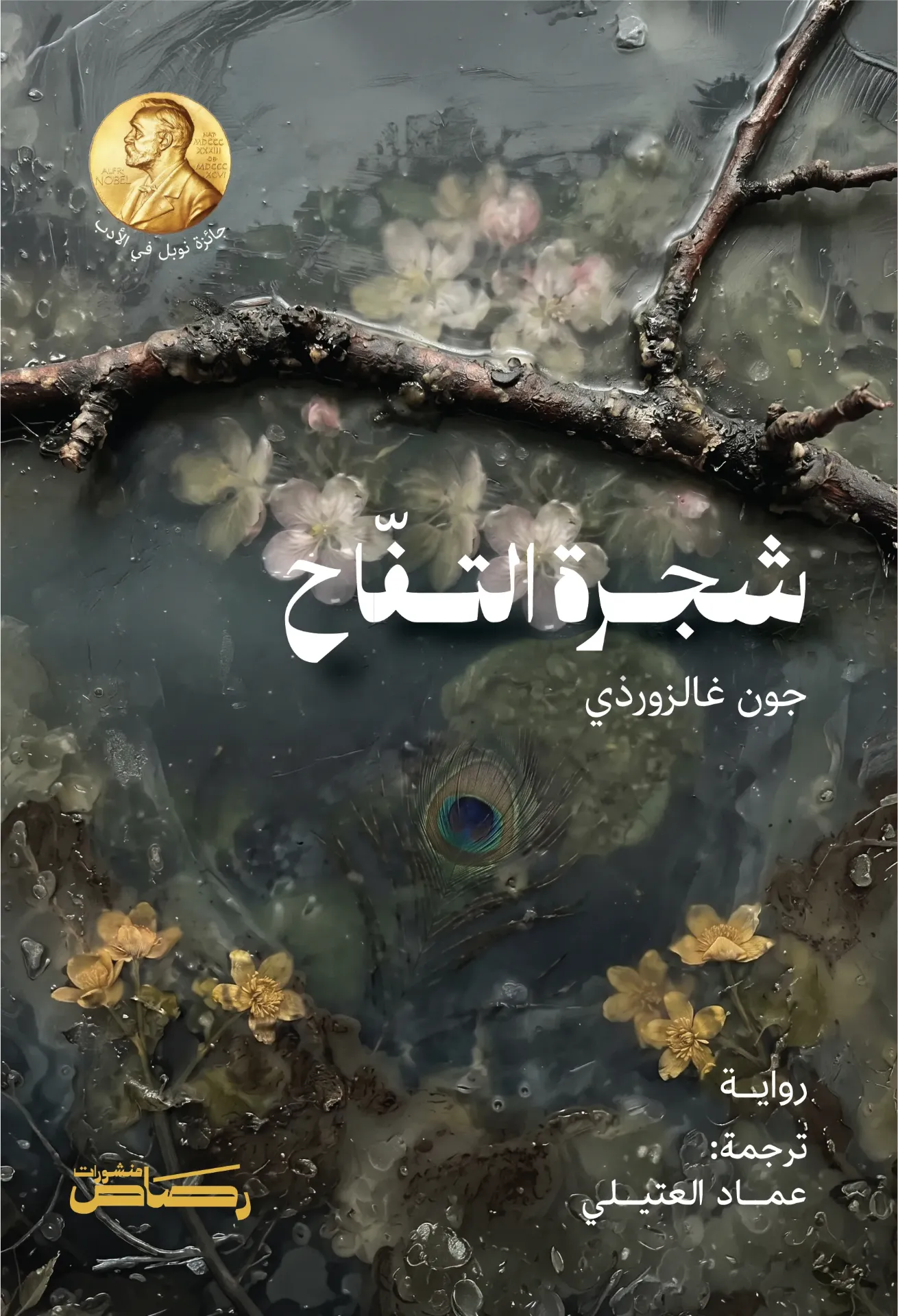
شجرة التفاح
**John Galsworthy** was one of the great figures of twentieth-century English literature, renowned for his penetrating observations of class, society, and the desires people conceal beneath the surface of their manners and respectability. Awarded the **Nobel Prize in Literature**, he remains celebrated for his ability to reveal the tension between the lives we live and the lives we secretly wish for. In **The Apple Tree**, he offers a work that is gentle in language yet devastating in its emotional impact—a story about love arriving at the wrong moment and leaving behind a wound that never truly disappears.
The novella begins with what appears to be a passing encounter between a man from a privileged world and a simple young woman from the countryside. Yet Galsworthy does not write a conventional love story; instead, he opens a deeper question: **Do we truly love people themselves, or do we love the way we feel when we are with them?** Nature is not merely a silent backdrop here—it becomes a reflection of emotion. The hills, the path, the shadows, and the apple tree itself transform into symbols of a perfect moment that can never last.
At the heart of the work lies a conflict that requires no dramatic confrontation. A man is torn between passion and social expectations, while a woman offers her heart completely in a world that shows little mercy toward innocence. There is no obvious villain, and that is precisely what makes the story so painful. Sometimes suffering does not come from betrayal, but from hesitation, from polite cowardice, from a comfortable choice that quietly destroys another person's life. The novella’s power lies in showing how loss can emerge from small decisions—and how regret can become the true protagonist.
After reading, a quiet bitterness will remain with you, as though you have remembered something that never happened to you personally, yet somehow feels familiar. You will realize that some moments are not lost when they end, but when we hesitate before embracing them. This is a brief work, yet it leaves an impression deeper than many longer novels that speak loudly without meaning.
And if a sincere opportunity once crossed your path and you abandoned it in the name of reason—was reason truly wisdom, or was it simply a more respectable name for fear?
جون غالزورذي