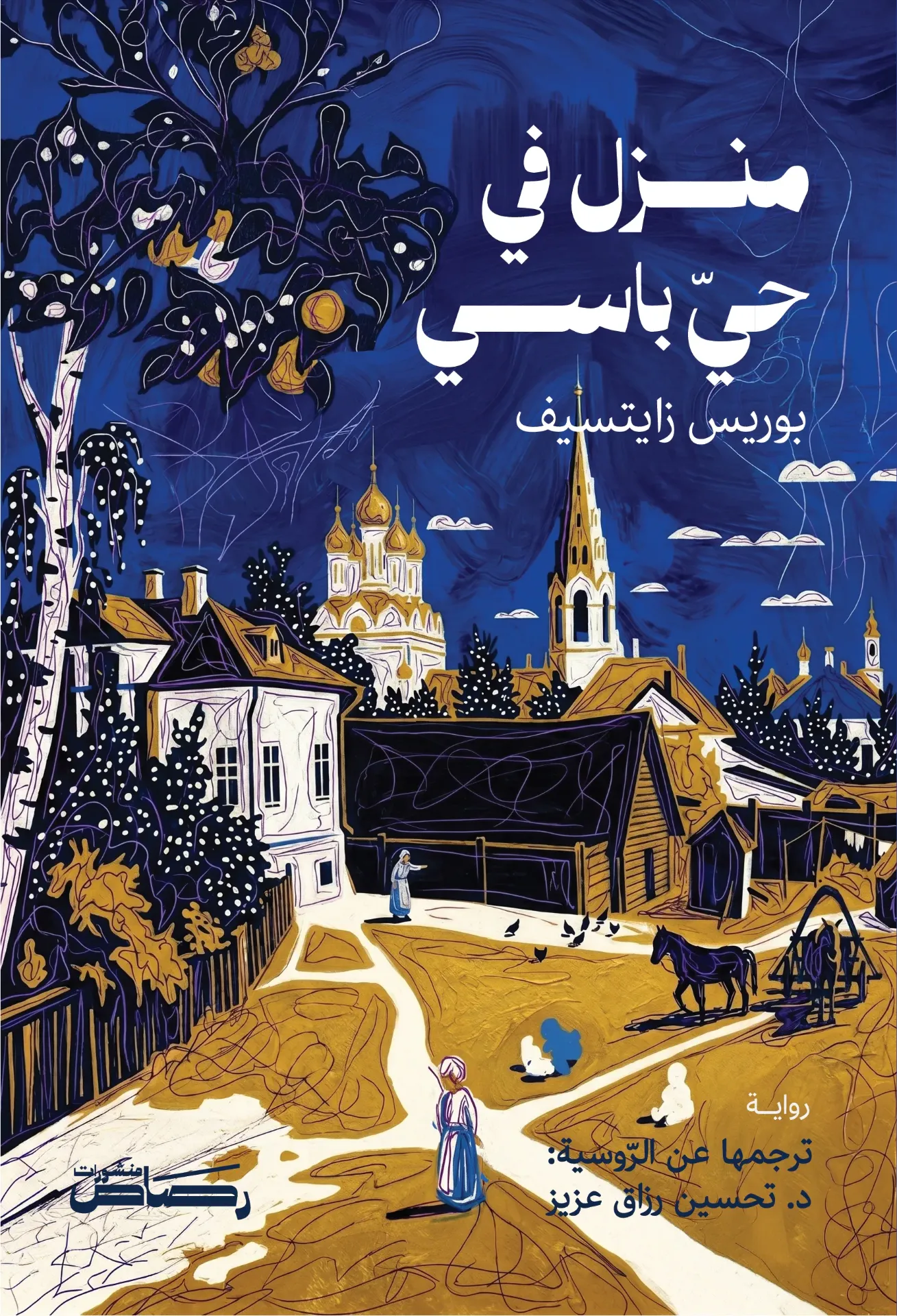
منزل في حيّ باسي
**Boris Zaytsev** was one of the quiet voices of Russian literature—a writer more concerned with the human spirit than with public noise, and more interested in inner life than in grand ideologies. Perhaps that is why he remains less widely known, a reminder that the literary marketplace often rewards the loudest voices while overlooking the most refined. Renowned for his lyrical prose, contemplative style, and remarkable ability to capture the subtle moments that pass unnoticed in ordinary lives, Zaytsev offers in **A House in the Passy District** a work that transcends its narrative to become a meditation on exile, memory, and the ever-changing nature of life.
The novel unfolds in a setting where place and state of mind become inseparable. The house is far more than a physical dwelling—it is a symbol of everything people lose and spend their lives trying to reclaim. Through the quiet streets of **Passy**, the Parisian neighborhood whose outward appearance suggests stability and permanence, Zaytsev reveals the inner unease that follows his characters as they confront exile, nostalgia, shifting relationships, and the elusive search for a place they can truly call home.
At the heart of the novel lies the quiet strength of Zaytsev's craftsmanship. He avoids dramatic plots and manufactured surprises, choosing instead to build an entire emotional world from the smallest details: a passing glance, a lingering silence, a room still marked by those who have departed, and a city that offers shelter without ever granting belonging. His transparent, elegant prose transforms sorrow into something almost graceful, while making loneliness all the more vivid.
When you finish the novel, you may find yourself thinking of places not as walls and roofs, but as layers of memory. You will come to realize that a person can live in a beautiful house and still remain homeless in the deepest sense. Above all, the book offers a profound understanding of exile—not only the kind that crosses borders, but the quieter exile that can take root within the human soul itself.
بوريس زايتسيف